

Table of Contents
Carbon an Important Element Class 9 Maharashtra Board
Carbon: An Important Element is Chapter 13 of Class 9 Science (Maharashtra Board).
This chapter explains the importance of carbon in nature, its occurrence, allotropes, compounds, fossil fuels, and its role in daily life. Carbon is one of the most important elements because it forms the basis of life, fuels, and organic compounds.
Carbon is a very important non-metal element. It is the basic building block of all living organisms and forms a large number of compounds. Due to its special properties like catenation and tetravalency, carbon forms different structures and fuels essential for life and industry.
📌 Some Important Details
Uses: fuels (coal, petrol, diesel), medicines, plastics, pencils (graphite), jewellery (diamond)
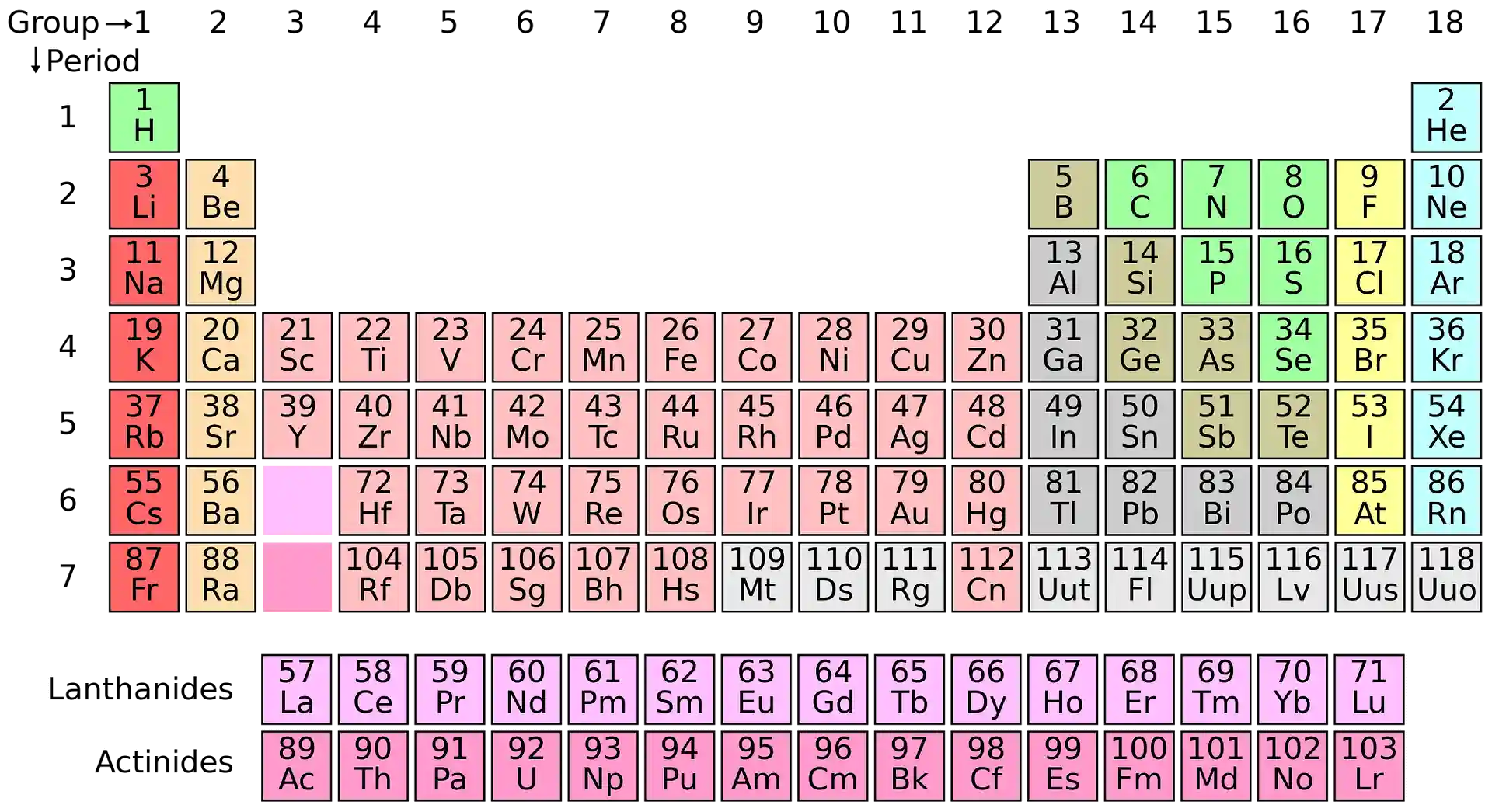
Atomic number: 6
Symbol: C
Nature: Non-metal
Special properties:
Allotropy – exists in different forms like diamond, graphite, fullerene
Catenation – ability to form long chains
Std 9 Science Chapter 13 Carbon: An Important Element Question Answer Maharashtra Board
1. Select the proper option and complete the statements
(single, all, double, ionic, carbon, give and take, hydrogen, multiple, share, most, covalent)
a. A carbon atom forms a ….……………. bond with other atoms. In this bond the two atoms ….electrons.
Answer: covalent, share
b. All the carbon bonds in a saturated hydrocarbon are ….……………. electrons.
Answer: Single
c. At least one carbon bond in an unsaturated hydrocarbon is ….…………… .
Answer: multiple
d. ….……………. is the essential element in all the organic compounds.
Answer: Carbon
e. The element hydrogen is present in ….. organic compound.
Answer: all
2. Answer the following questions
a. Why are carbon and its compounds used as fuels?
Answer:
(i) The name ‘carbon’ is derived from Latin word ‘carbo’meaning coal. In the earth’s crust, carbon is present to an extent of approximately 0.27% in the form of carbonate, coal and petroleum. One of the non-crystalline and amorphous form of carbon is coal. Coal is a fossil fuel.
(ii) Peat, lignite, bituminous and anthracite are the four types of coal in the increasing order of their carbon content and heat produced respectively. Charcoal and coke are the other amorphous forms of carbon used as fuel.
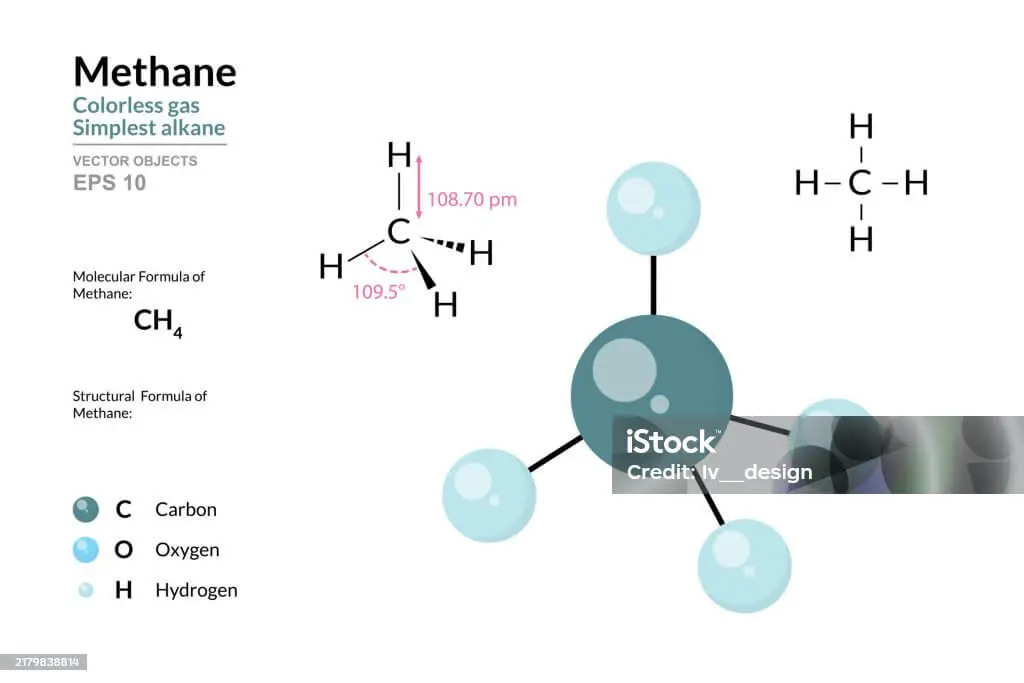
(iii) Compounds of carbon such as hydrocarbons consist of carbon and hydrogen and they are easily combustible. For example, methane (CH4) which occurs in natural gas is highly inflammable. It bums by reacting with oxygen to give a bluish flame. In this reaction, 213 Kcal/mol of heat is given out. Methane bums completely.
Chemical reaction:
CH4 + 2O2 → CO2 + 2H2O + Heat
(iv) Thus when hydrocarbons are burnt in air, large amount of heat is evolved with formation of carbon dioxide (CO2) and water (H2O). Due to evolution of heat on combustion, carbon and its compounds are used as fuels.
Marathi Solutions : Balbharati Solutions
b. In which compound forms does carbon occur?
Answer:
Carbon in its combined state exists as various compounds such as:
- Carbon dioxide and in the form of carbonates such as calcium carbonate, marble, calamine (ZnCO3).
- Fossil fuel – coal, petroleum, natural gas.
- Carbonaceous nutrients – carbohydrates, proteins, fats.
- Natural fibres – cotton, wool, silk.
- Hydrocarbons – compound of carbon and hydrogen.
c. Write the uses of the diamond.
Answer:
Uses of diamonds are:
- Diamonds are used in glass cutting and rock drilling machines.
- Diamonds are used in ornaments.
- Diamond knives are used in the eye surgery.
- Diamond dust is used for polishing other diamonds.
- Diamond is used to make windows giving protection from radiation in space and in artificial satellites.
3. Explain the difference:
a. Diamond and graphite.
Answer:
| Diamond | Graphite |
| (i) Diamond is a brilliant, hard and crystalline allotrope of carbon. | (i) Graphite is a black, soft, brittle and slippery crystalline allotrope of carbon. |
| (ii) In diamonds, every carbon atom is bonded to four neighbouring atoms by covalent bonds forming tetragonal three dimensional structure which makes it very hard. | (ii) In graphite, every carbon atom is bonded to three other carbon atoms by covalent bonds in such a way that a hexagonal layered structure is formed. A graphite crystal is made of many such layers of carbon atoms. These layers slip over each other on applying pressure. |
| (iii) Density of diamond is 3.5 g/cm3. | (iii) Density of graphite is 1.9 to 2.3 g/cm3. |
| (iv) Diamond is a bad conductor of electricity as it does not have free electrons. | (iv) Inside each layer of graphite, free electrons move continuously within the entire layer. Hence, graphite is a good conductor of electricity. |

b. Crystalline and non-crystalline forms of carbon.
Answer:
| Crystalline forms of carbon | Non-crystalline forms of carbon |
| (i) A crystalline form has a regular and definite arrangement of atoms. (ii) They have high melting points and boiling points. (iii) A crystalline form has a definite geometrical shape, sharp edges and plane surfaces. (iv) Diamond, graphite and fullerene are different crystalline forms of carbon. | (i) A non-crystalline form does not have a regular and definite arrangement of atoms. (ii) They have low melting points and boiling points. (iii) They are amorphous, hence, they do not have definite geometrical shape. (iv) Coal, charcoal and coke are different noncrystalline/amorphous forms of carbon. |
4. Write scientific reasons
a. Graphite is a conductor of electricity.
Answer:
- In graphite, each carbon is bonded to three other carbon atoms in such a way that a hexagonal layered structure is formed.
- Due to this structure, graphite has free electrons available.
- These free electrons move continuously within the entire layer.
- Hence, graphite is a good conductor of electricity.
b. Graphite is not used in ornaments.
Answer:
- Graphite is a black, soft, brittle and dull form of carbon.
- It is neither malleable nor ductile.
- These properties of graphite make it unsuitable for making of ornaments.
- Hence, graphite is not used for making ornaments.
c. Limewater turns milky when CO2 is passed through it.
Answer:
- Limewater traditionally means a weak solution of the alkali calcium hydroxide Ca(OH)2.
- When CO2 is passed through limewater, it reacts with calcium hydroxide to form insoluble particulates (precipitate) of Calcium carbonate (CaCO3).
- Calcium carbonate is weak basic salt and this gives a milky white precipitate.
- Hence, lime water turns milky when CO2 gas is passed through it.
d. Biogas is an eco-friendly fuel.
Answer:
- Biogas is formed by the decomposition of animal dung, dry leaves, wet garbage in a biogas plant.
- This produces methane gas also called biogas.
- Biogas is a very cheap fuel option which meets the demand for cooking gas.
- Biogas is eco-friendly as it contains about 55% to 60% of methane and rest is carbon dioxide, hence, on combustion it does not produce harmful gases which cause pollution.
- Biogas is a fuel which is convenient to use and in addition to this it produces a very good manure as a side product of the process.
- Hence, biogas is an eco-friendly fuel.
5. Explain the following.
a. Diamond, graphite and fullerenes are crystalline forms of carbon.
Answer:
- Diamond, graphite and fullerenes are crystalline allotropes of carbon. Carbon shows the property of allotropy, in which the same element exists in different forms with same chemical properties but different physical properties.
- Crystalline forms of carbon have a regular and definite arrangement of carbon atoms, high melting points and a definite geometrical shape.
- In diamond, each carbon atom is bonded to four neighbouring carbon atoms by strong covalent bonds, forming a three-dimensional tetrahedral structure. This rigid structure makes diamond extremely hard and the hardest natural substance.
- In graphite, each carbon atom is bonded to three other carbon atoms, forming a hexagonal layered structure. These layers can slide over one another, which makes graphite soft and slippery. A single layer of graphite is called graphene.
- Fullerenes are rare crystalline forms of carbon found in soot. The first discovered fullerene is Buckminster fullerene (C₆₀), also called a buckyball, due to its spherical structure. Other fullerenes like C₇₀, C₇₆, C₈₂ also exist.
- Hence, diamond, graphite and fullerenes are crystalline forms of carbon with different structures and properties.
b. Methane is called marsh gas.
Answer:
- Methane is formed by the decomposition of plant and animal matter in swamps or marshy areas.
- As methane gas bubbles out from marshy area, it is called as marsh gas.
c. Petrol, diesel, coal are fossil fuels.
Answer:
1. Petrol, diesel and coal are called fossil fuels because they are formed from the remains of plants and animals buried under the earth for millions of years. These fuels contain a high percentage of carbon.
2. Coal is formed from dead trees and vegetation that got buried in swamps and slowly changed into coal due to high pressure and temperature.
3. Petrol and diesel are obtained from petroleum (mineral oil), which is formed from marine plants and animals buried under the sea bed. Petrol and diesel are separated from petroleum by fractional distillation.
Hence, petrol, diesel and coal are fossil fuels.
d. Uses of various allotropes of carbon.
e. Use of CO2 in fire extinguisher.
Answer:
- CO2 based fire extinguishers do not cause corrosion and are non-conductors of electricity.
- It is beyond their capacity to extinguish a big fire.
- Therefore these fire extinguishers are used to extinguish small scale fire of electrical and electronic equipments.
f. Practical uses of CO2.
Answer:
Practical uses of CO2 are:
- CO2 is used to make aerated drinks.
- CO2 obtained by chemical reaction or kept under pressure is used in fire extinguishers. Liquified CO2 is used to remove caffeine from coffee.
- Liquid CO2 is used as solvent in modem eco-friendly dry cleaning.
- Solid carbon dioxide is used in cold storage and to keep milk and milk products and frozen substances cool during transport. It is also used for getting special effects of a mist in dramas and movies.
6. Write two physical properties each.
a. Diamond
Answer:
Properties of diamond are:
- Brilliant and pure diamond is the hardest natural substance.
- The density of diamond is 3.5 g/cm3.
- The melting point of diamond is 3500 °C.
- When a diamond is heated at 800 °C in the presence of oxygen, CO2 is given away. In this process no other product besides CO2 is formed.
- Diamond does not dissolve in any solvent.
- Acids/bases have no effect on diamond.
- Diamond is a bad conductor of electricity as it does not have free electrons.
b. Charcoal
Answer:
- The charcoal that is made from animals is made from their bones, horns, etc.
- On the other hand, the charcoal made from plants is formed by combustion of wood in an insufficient supply of air.
c. Fullerene
Answer:
Properties of fullerenes are:
- Molecules of fullerenes are found in the form of buckyballs and buckytubes.
- There are 30 to 900 carbon atoms in one molecule of a fullerene.
- Fullerenes are soluble in organic solvents such as carbon disulphide, chlorobenzene.
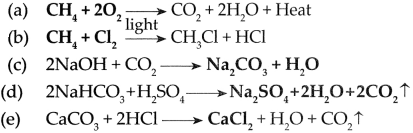
7. Complete the following Chemical reactions.
1. ………………..+………………..→ CO + 2H2O + Heat
2. ………………..+………………..→ HCl + Cl + HCl
3. 2 NaOH + CO2 →………………..+………………..
Answer:
8. Write answers to the following in detail.
a. What are the different types of coal? What are their uses?
Answer:
Coal is a fossil fuel. It contains carbon, hydrogen and oxygen. It also contains nitrogen, phosphorus and sulphur. It occurs in the solid state. It is of four types.
- Peat: Formation of peat is the first step in the formation of coal. It contains a high proportion
of water and less than 60% of carbon. Therefore, not much heat can be obtained from peat. - Lignite: Peat was transformed into Lignite due to increased pressure and temperature inside the earth. It contains 60 to 70% of carbon.- Lignite is the second step of the formation of coal.
- Bituminous coal: Bituminous coal was formed as the third step of formation of coal. It contains 70 to 90% of carbon.
- Anthracite: Anthracite is known as the pure form of coal. This coal is hard and contains about 95% of carbon.
Uses of coal:
- Coal is used as fuel in factories and homes.
- Coal is used to obtain coke, coal gas and coal tar.
- Coal is used in thermal power plants for generation of electricity.
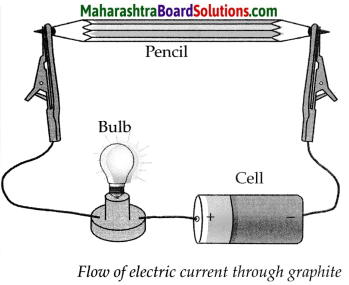
b. How will you prove experimentally that graphite is good conductor of electricity?
Answer:
Apparatus required: Lead pendi, electrical wires, battery/cell, small bulb, etc.
Step-I: Remove the lead from a pencil and assemble the apparatus as shown in the diagram.
Step-II:
- Start the electric current in the circuit, the moment the electric current is passed through the circuit, the bulb glows.
- This experiment proves that graphite is a good conductor of electricity as graphite has free electrons moving continuously within the entire layer and these free electrons conduct electricity in the lead of the pencil.
c. Explain the properties of carbon.
Answer:
Allotropic nature of Carbon: Some elements occur in nature in more than one form. The chemical properties of these different forms are the same but their physical properties are different. This property of elements is called allotropy. Carbon shows the property of allotropy.
Carbon allotropes are of two types:
(A) Crystalline forms:
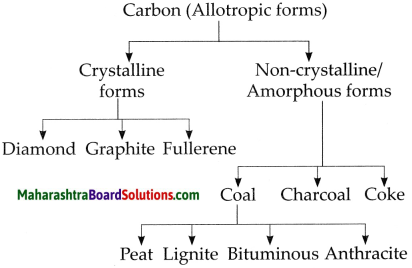
Carbon has three crystalline allotropes: Diamond, Graphite and Fullerene. Properties of crystalline forms of carbon are as follows:
- A crystalline form has a regular and definite arrangement of atoms.
- They are made up of only carbon atoms.
- They have high melting points and boiling points.
- A crystalline form has a definite geometrical shape, sharp edges and plane surfaces.
(B) Amorphous forms or non-crystalline forms: Coal, charcoal, coke are the non-crystalline forms of carbon.
Properties of non-crystalline forms of carbon are as follows:
- The arrangement of carbon atoms in this form is not regular.
- Apart from carbon atoms, they also contain hydrogen, oxygen, nitrogen, phosphorus and sulfur atoms.
- Compared to a crystalline form, they have low melting and boiling points.
- Most of them are used as fuels.
d. Classify carbon.
Answer:
Carbon is classified as follows:
9. How will you verify the properties of carbon dioxide?
Answer:
Properties of carbon dioxide can be verified in the following ways:
- When a burning candle is placed in a gas jar of carbon dioxide, it extinguishes indicating that carbon dioxide is a non-combustible gas and does not support combustion.
- When carbon dioxide gas is passed through lime water, it turns lime water milky due to the formation of insoluble calcium carbonate.
- Moist blue litmus turns red in a gas jar of carbon dioxide indicating, it is acidic in nature.
- Carbon dioxide is fairly soluble in water, it dissolves in water forming carbonic acid.
Class 9 Science Chapter 13 Carbon Important Questions
🔹 DETAILED INFORMATION (Short Notes)
🔸 Occurrence of Carbon
Carbon occurs in nature in free state (diamond, graphite) and combined state (carbon dioxide, coal, petroleum, limestone).
🔸 Allotropes of Carbon
Carbon shows allotropy, meaning it exists in different forms:
- Crystalline forms: Diamond, Graphite, Fullerene
- Amorphous forms: Coal, charcoal, coke, lampblack
🔸 Properties of Carbon
- Atomic number: 6
- Non-metal
- Forms strong covalent bonds
- Shows catenation (self-linking ability)
🔸 Fossil Fuels
Coal, petroleum (petrol, diesel) and natural gas are fossil fuels rich in carbon. They are used as major sources of energy.
🔸 Uses of Carbon
- Diamond: Jewellery, cutting tools
- Graphite: Pencil lead, lubricant, electrodes
- Coal & petroleum: Fuels
- Carbon compounds: Medicines, plastics, fuels
📝 Questions with Solutions
Q1. What is allotropy?
Answer: The property by which an element exists in more than one physical form in nature is called allotropy. Carbon shows allotropy.
Q2. Why is diamond very hard?
Answer: In diamond, each carbon atom is bonded to four others forming a strong 3-D structure.
Q3. Why is graphite used as a lubricant?
Answer: Its layers can slide over each other easily.
Carbon: An Important Element – Class 9 (MCQs)
- Carbon shows allotropy because it exists in different forms.
Answer: True - The hardest natural substance is Diamond.
Answer: Diamond - Graphite is soft due to layered structure.
Answer: Layered hexagonal structure - Coal, petrol and diesel are fossil fuels.
Answer: Fossil fuels - Atomic number of carbon is 6.
Answer: 6
🔹 FAQ – Carbon an Important Element Class 9
❓ What is carbon?
Carbon is a non-metal element with atomic number 6. It is essential for life and forms many compounds.
❓ Why is carbon called an important element?
Carbon forms the basis of living organisms, fuels, and organic compounds, making it very important.
❓ What are the allotropes of carbon?
Allotropes of carbon include diamond, graphite, fullerene, coal, charcoal and coke.
❓ What are fossil fuels?
Fossil fuels are fuels formed from dead plants and animals over millions of years, such as coal, petrol and diesel.
❓ Which chapter is Carbon: An Important Element?
It is Chapter 13 of Class 9 Science Maharashtra Board.
❓ Std 9 Carbon Chapter Question Answer PDF
Q1. Why is carbon called an important element?
👉 Because all living organisms and many useful substances are made of carbon.
Q2. What are crystalline allotropes of carbon?
👉 Diamond, graphite and fullerene.
Q3. Why is graphite soft but diamond hard?
👉 Due to difference in atomic structure and bonding.
Q4. Are petrol and diesel carbon compounds?
👉 Yes, they are fossil fuels rich in carbon.